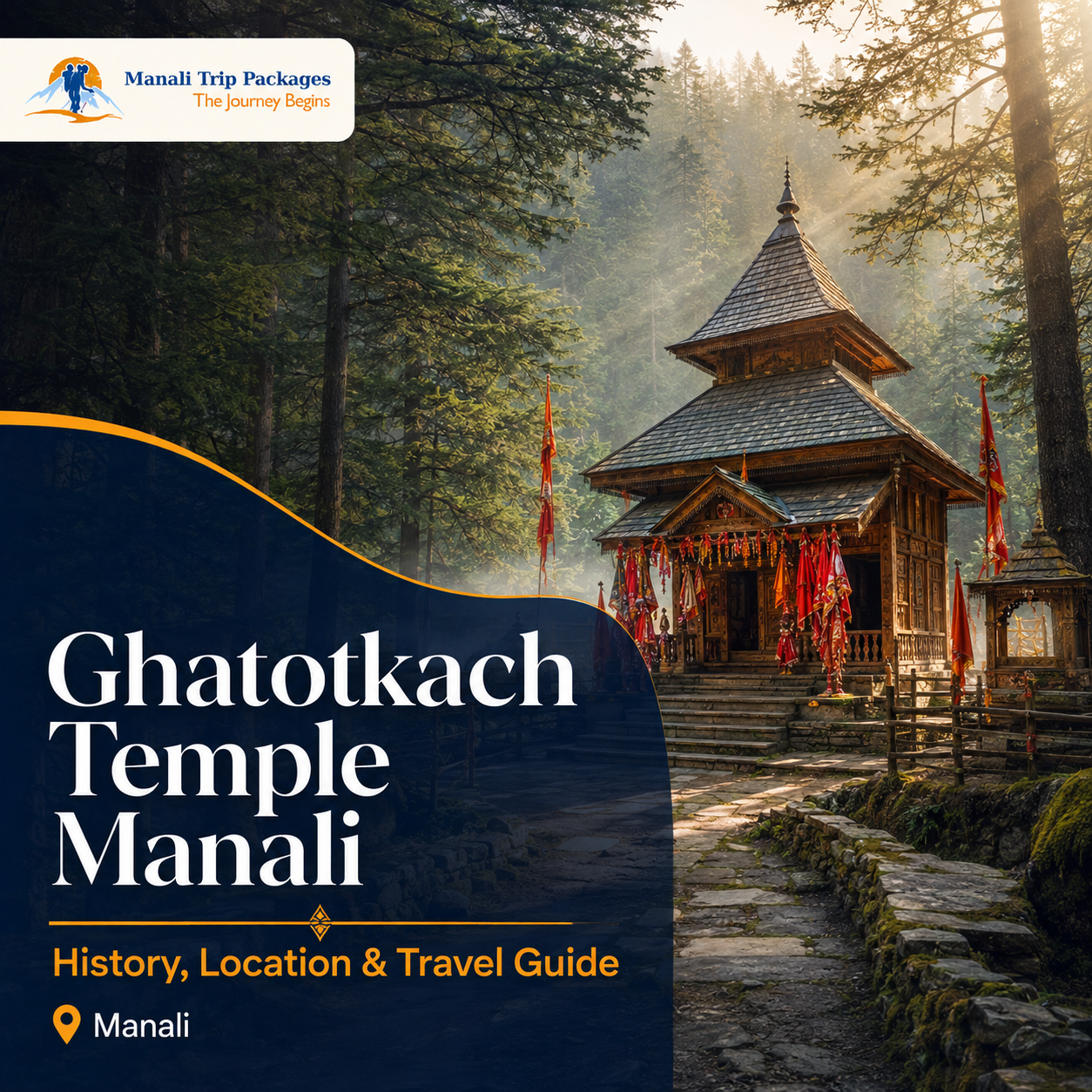
If you are exploring Manali beyond its famous markets and busy sightseeing spots, the Ghatotkach Tree Temple offers a quieter and culturally distinctive experience. Located close to the well-known Hidimba Devi Temple in the Dhungri area, this small open-air shrine is associated with Ghatotkach, the legendary son of Bhima and Hidimba from the Mahabharata.
Unlike conventional temples with elaborate buildings, this sacred spot is closely connected with a large deodar tree and the natural surroundings of the Himalayan forest. Its simplicity is part of its appeal. Visitors can experience a peaceful place of worship while also learning about local traditions, mythology, and the cultural landscape around Dhungri.
For travelers planning a visit through Manali Trip Packages, adding this shrine alongside nearby attractions can create a more meaningful sightseeing experience. This guide covers its story, location, significance, what to see, the best time to visit, and practical tips for first-time visitors.
What Makes Ghatotkach Temple Special?
The shrine is commonly known as the Ghatotkach Tree Temple because worship is centered around a sacred tree rather than a large conventional temple structure. Travel sources describe it as an open-air shrine near Hidimba Devi Temple, with the tree forming the central visual and spiritual feature.
It is also an easy addition to a visit to the Hidimba Devi Temple because the two attractions are located very close to each other. A government-backed study of the Hadimba sacred grove lists Ghatotkach Temple among the nearby cultural attractions, confirming its place within the wider heritage landscape of the area.
Ghatotkach Temple History and Mahabharata Connection
The story of Ghatotkach is closely linked with the Mahabharata. According to the traditional account, Hidimba lived in the forest with her brother Hidimb. During the Pandavas’ exile, Bhima encountered Hidimba and defeated him. Bhima later married Hidimba, and their son was Ghatotkach.
Ghatotkach is remembered in the epic as a powerful warrior who fought on the side of the Pandavas during the Kurukshetra war. His story has continued through local traditions, where he is respected as a heroic figure.
The connection between Ghatotkach and the Manali area is especially meaningful because his mother, Hidimba, is worshipped as a deity in the region. The nearby Hidimba Devi Temple, also known as Dhungri Temple, was built in 1553 by Maharaja Bahadur Singh and stands within a deodar forest. Himachal Tourism describes it as a four-tier pagoda-style temple built over a cave shrine associated with Hidimba.
The Ghatotkach shrine should therefore be understood as part of a larger cultural setting rather than as an isolated attraction. Visiting both places provides a clearer picture of the local traditions surrounding the mother and son.
Where Is Ghatotkach Temple Located?
The shrine is situated on Hadimba Temple Road in the Siyal/Dhungri area of Manali, Himachal Pradesh. It is very close to Hidimba Devi Temple and can be included easily in the same sightseeing stop.
For the most accurate route on the day of your visit, use a current map service and check local road conditions, particularly during periods of snowfall or heavy rain.
How to Reach Ghatotkach Temple
From central Manali, you can reach the Dhungri area by local taxi or other available local transport. Visitors who are already going to Hidimba Devi Temple can continue on foot toward the nearby shrine.
The short walk is one of the enjoyable parts of the visit because the route passes through a forested setting rather than feeling like a typical urban sightseeing stop. Depending on your starting point and walking pace, allow extra time rather than rushing between attractions.
If you are traveling with older adults, young children, or anyone with limited mobility, consider local transport up to the nearest convenient point and check the walking conditions before starting.
What Can You See at the Shrine?
The most distinctive feature is the sacred tree around which the shrine is organized. Its natural appearance gives the place a very different character from Manali’s larger built temples.
Visitors may notice traditional objects associated with worship, including bells, red threads, and tridents. These elements reflect the living nature of the shrine and the continuing relationship between local faith and the surrounding landscape.
The shrine is modest, so it is better approached as a cultural and spiritual stop rather than a place to expect elaborate interiors, galleries, or large architectural complexes.
Religious and Cultural Significance
Ghatotkach is remembered not only as a character from the Mahabharata but also as a heroic figure in regional religious traditions. His association with strength, courage, and loyalty gives the shrine cultural importance for devotees and visitors interested in Himalayan traditions.
The nearby worship of Hidimba adds another layer to the experience. The official Incredible India tourism portal explains that Hidimba was the wife of Bhima and mother of Ghatotkacha, while the existing Hidimba temple dates to 1553.
This connection makes the area particularly interesting for travelers who want to understand how epic traditions, local deity worship, forests, and community customs come together in Himachal Pradesh.
Best Time to Visit Ghatotkach Temple
The shrine can be visited throughout the year, but the experience changes considerably with the seasons.
Spring and summer generally provide comfortable conditions for walking through the surrounding forest. The greenery can make the area especially pleasant for visitors who enjoy nature and photography.
Autumn often brings clearer mountain weather and comfortable sightseeing conditions. It can be a good option for travelers who want to explore Manali without focusing exclusively on snow.
Winter creates a very different atmosphere. Snow and cold weather can make the surrounding landscape beautiful, but walking conditions may become slippery. Check the local weather before heading out and wear suitable footwear.
Early morning or later in the day can be preferable if you want a quieter experience. The nearby Hidimba Devi Temple is a popular attraction, so visiting earlier can also help you avoid the busiest sightseeing period.
Ghatotkach Temple Timings and Entry Information
Unlike major ticketed attractions, the shrine is generally treated as a simple open-air religious site rather than a conventional monument with a formal ticket counter. Available travel listings commonly describe the visit as free.
However, opening practices and access can vary because this is a local place of worship. Travelers should avoid relying on an old online timing listing and confirm locally if they are planning a visit at a very specific hour.
There is no need to spend several hours here. Around 20 to 45 minutes can be enough for most visitors, although those interested in photography, local culture, or quiet reflection may choose to stay longer.
Things to Do Near Ghatotkach Temple
One of the biggest advantages of visiting this shrine is its proximity to several other attractions.
Hidimba Devi Temple
This is the most natural place to visit before or after the Ghatotkach shrine. Himachal Tourism identifies the temple as a major Manali attraction, describing its four-tier pagoda style, wood roof, stone foundation, and connection with Hidimba.
Museum of Himachal Culture and Folk Art
The museum near the Hadimba temple area offers an opportunity to explore regional cultural objects and traditional heritage. A recent study of the Hadimba sacred grove also lists the museum among nearby attractions.
Old Manali
After exploring the religious sites around Dhungri, travelers can continue toward Old Manali for its cafés, local shops, village atmosphere, and riverside surroundings.
Manali Nature Walks
The deodar forest around the temple area is ideal for travelers who enjoy gentle walks and nature photography. Stay on appropriate paths and respect the surrounding vegetation.
How Long Should You Spend Here?
For most travelers, Ghatotkach Temple does not require a separate half-day itinerary. A practical plan is to combine it with Hidimba Devi Temple and the surrounding attractions.
Allow around 20 to 45 minutes for the shrine itself, then continue to the nearby temple and cultural sites. If you enjoy photography or want to spend time observing local traditions, you can extend your visit.
Tips for Visiting Ghatotkach Temple
- Dress respectfully because this is a religious site.
- Keep your voice low and avoid disturbing devotees.
- Do not touch religious objects or offerings unless local customs clearly permit it.
- Avoid littering and carry waste with you until you find an appropriate disposal point.
- Follow local instructions regarding photography.
- Wear comfortable footwear, especially during winter or wet weather.
- Be cautious around uneven forest paths.
- Do not remove threads, bells, flowers, or other offerings from the shrine.
- If visiting with children, keep them close because natural forest terrain can be uneven.
- Check current weather and road conditions before traveling during snowfall or heavy rain.
Why Add Ghatotkach Temple to Your Manali Itinerary?
Manali is often associated with scenic valleys, snow activities, cafés, and adventure experiences. Yet its cultural identity is equally important. A visit to Ghatotkach Temple gives travelers an opportunity to see a quieter side of the destination.
The shrine does not depend on grand architecture to attract attention. Its appeal comes from the combination of mythology, local worship, sacred trees, and the surrounding Himalayan environment.
It is particularly worthwhile for travelers interested in the Mahabharata, Hindu traditions, local history, nature, and less-commercial sightseeing experiences.
If your itinerary already includes Hidimba Devi Temple, adding the nearby Ghatotkach shrine requires little extra travel time. This makes it one of the easier cultural additions to a day of sightseeing.
Planning a Meaningful Manali Visit with Manali Trip Packages
A well-planned holiday is not only about covering as many attractions as possible. It is about choosing places that match your interests and allowing enough time to experience them.
Manali Trip Packages can help travelers organize accommodation, sightseeing, transportation, and other trip requirements according to their preferred itinerary. When planning your schedule, consider combining major attractions with smaller cultural sites such as Ghatotkach Temple.
Before finalizing an itinerary, check seasonal conditions, travel time between attractions, and the opening or access information for individual sites.
Frequently Asked Questions
Is Ghatotkach Temple worth visiting in Manali?
Yes, especially if you enjoy mythology, local traditions, nature, and quieter cultural attractions. Its proximity to Hidimba Devi Temple makes it easy to include in a sightseeing plan.
How far is Ghatotkach Temple from Hidimba Devi Temple?
The shrine is located very close to Hidimba Devi Temple. Several travel sources describe it as a short walk from the temple, making it convenient to visit both together.
Who is Ghatotkach in the Mahabharata?
Ghatotkach is traditionally described as the son of Bhima and Hidimba. He is remembered as a powerful warrior who fought for the Pandavas during the Kurukshetra war.
Is there an entry fee for Ghatotkach Temple?
Available travel listings generally describe the shrine as free to visit. Because it is a local place of worship, visitors should follow any local guidance regarding access and offerings.
What is the best time to visit the shrine?
Spring, summer, and autumn can offer comfortable walking conditions. Winter is attractive for snow lovers but may bring slippery paths and colder weather. Early visits can provide a quieter experience.
Can I visit Ghatotkach Temple and Hidimba Temple on the same day?
Yes. Their close proximity makes visiting both in one outing practical. You can also combine them with the nearby museum and Old Manali.
What should I wear when visiting?
Comfortable, weather-appropriate clothing and footwear are recommended. Since it is a religious site, modest clothing and respectful behavior are appropriate.
Conclusion
Ghatotkach Temple is a small but culturally meaningful attraction in Manali. Its connection with the Mahabharata, association with Hidimba and Bhima, sacred tree setting, and peaceful forest surroundings make it different from the destination’s more commercial sightseeing spots.
Its location near Hidimba Devi Temple also makes it easy to include in a cultural day of exploration. Take time to observe the shrine respectfully, enjoy the surrounding deodar forest, and learn about the traditions that give this place its significance.
For travelers looking beyond the usual sightseeing checklist, Ghatotkach Temple offers a simple way to discover another layer of Manali’s spiritual and cultural identity.